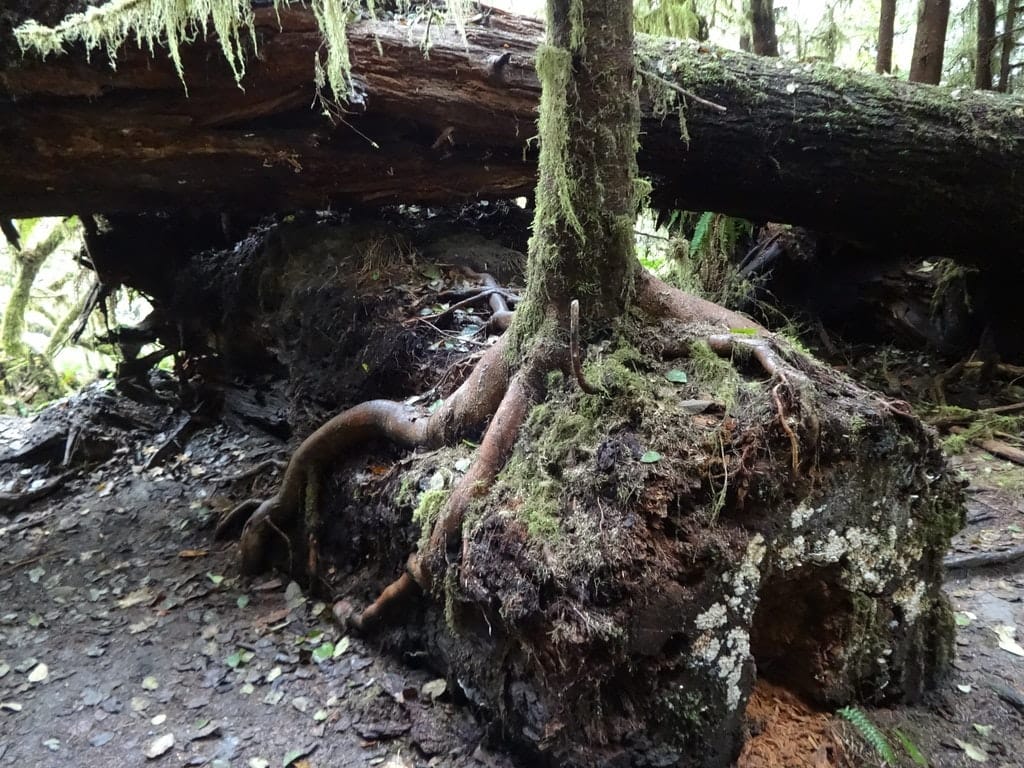
Believe it or not, that fallen branch that seems like an eyesore to you is prime real estate for MILLIONS of organisms!
In a forest, a fallen log is often called a “nurse log” because it provides nutrients, moisture, and shelter for new seedlings and other plants, acting as a nursery for forest regeneration. The decomposing material is also host to a staggering diversity of life, including:
🌿Plants and Fungi
- Mosses – Thrive on the moist, shady surfaces of decaying wood.
- Liverworts – Often found in wetter, cooler forest microclimates.
- Ferns – Such as Licorice Fern (Polypodium glycyrrhiza) and Sword Fern (Polystichum munitum).
- Seedlings of trees – Western hemlock, Douglas-fir, Sitka spruce, and others germinate in the decaying wood.
- Lichens – Symbiotic organisms made of fungi and algae or cyanobacteria, often colonize nurse log surfaces.
- Fungi (mushrooms) – Including decomposers like Turkey Tail, Artist’s Conk, Amadou, and various mycorrhizal fungi.
🐛 Invertebrates
- Beetles – Including bark beetles, wood-boring beetles, and sap beetles.
- Termites and Carpenter Ants – Break down woody material.
- Millipedes and Centipedes – Help decompose leaf litter and wood.
- Slugs and Snails – Feed on fungi, algae, and decaying organic matter.
- Springtails and Mites – Tiny decomposers and soil dwellers in the log’s humus layer.
- Spiders – Hunt insects in and around the log.
🦎 Amphibians and Reptiles
- Salamanders – Such as Ensatina and Rough-skinned Newts often use nurse logs for moisture and cover.
- Frogs and toads – Use the damp environment under and around logs.
- Garter snakes – May shelter in hollow logs or hunt invertebrates there.
🐦 Birds
- Woodpeckers – Peck into soft wood for insects or create nesting cavities.
- Wrens, chickadees, and nuthatches – Use cavities or perch on mossy logs.
- Owls and other cavity nesters – May use large hollow logs as nest or roost sites.
🐿️ Mammals
- Small mammals – Mice, voles, and shrews forage for fungi and insects in and around logs.
- Squirrels – May cache food near nurse logs or use them for cover.
- Bats – Sometimes roost in hollow logs.
- Bears and raccoons – Might tear into logs for insects or grubs.