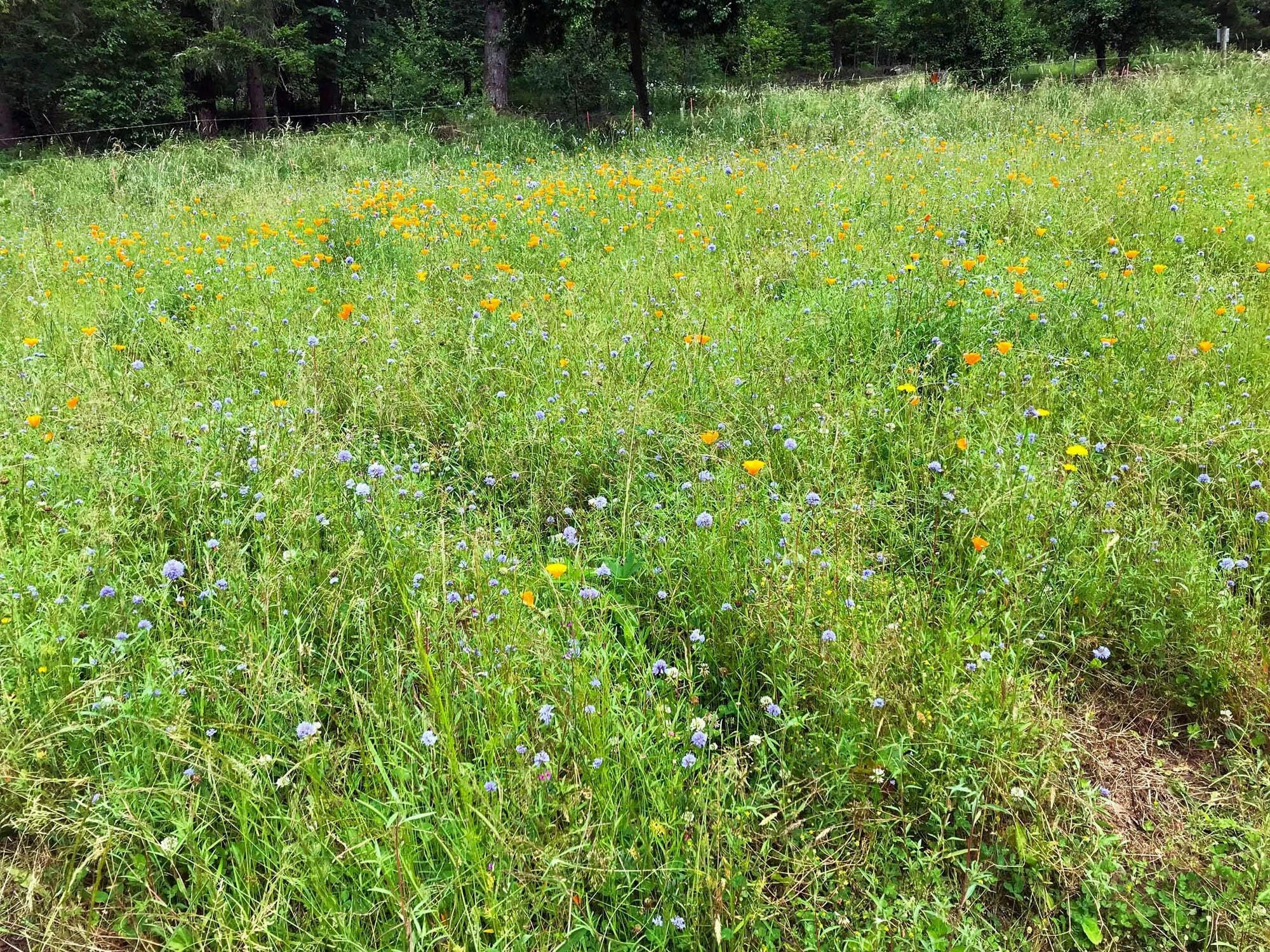
Replacing a traditional lawn with an eco-lawn or meadow offers a wide range of ecological, practical, and aesthetic benefits. Here’s a breakdown of the key reasons to make the switch:
Water Conservation
Traditional lawns require significant irrigation, especially in summer. Eco-lawns and meadows use drought-tolerant native or adapted plants that thrive on rainfall alone once established.
Reduced Maintenance
Less mowing—eco-lawns may only need 1–2 cuts per season; meadows often need just one annual mow. No need for fertilizing, aerating, or constant reseeding. Fewer weeds once the system is established due to dense, competitive plant cover.
Habitat Creation
Provides nectar, pollen, seeds, and shelter for pollinators, birds, butterflies, and beneficial insects. Supports native wildlife, including ground-nesting bees, caterpillars, and songbirds.
Soil Health AND Erosion Control
Deep-rooted plants in meadows and eco-lawns build soil structure, increase microbial life, and reduce compaction. Helps prevent erosion and improve water infiltration, reducing runoff.
Pollution Reduction
Reduces or eliminates the need for chemical fertilizers, herbicides, and pesticides. Lowers air and noise pollution from gas-powered lawn equipment.
Climate Resilience
Meadows and eco-lawns can survive heatwaves, drought, and poor soil conditions better than turfgrass. Deep roots help sequester carbon and increase landscape resilience.
Aesthetic And Educational Value
Meadows provide seasonal color, texture, and movement—far more interesting than a static green lawn. Can become a teaching tool for ecology, native plants, and pollinator conservation.
Basics of replacing your lawn
- Kill existing lawn (sheet mulch, solarize, or remove sod)
- Choose seed mix based on site conditions (sun, soil, moisture)
- Sow in fall or early spring for best results
- Water until established, then reduce irrigation