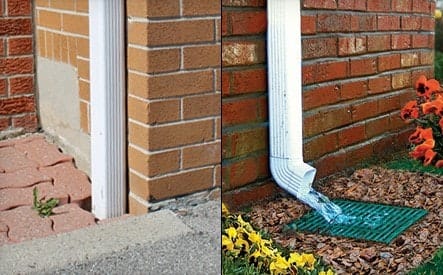
Redirecting the water from your downspouts is a simple, impactful way to reduce stormwater runoff, prevent erosion, and reroute rainwater into your landscape where it can be used or absorbed.
Downspouts are often directed onto a paved surface, such as a driveway, which sends water directly into the street when it rains. Downspouts may also be connected to a pipe in the ground that connects directly to the sanitary sewer or storm drain system. If this is the case, you can disconnect your downspout and redirect it to flow into a rain barrel or to a lawn or garden where it can soak into the ground. Redirecting downspouts to a landscaped area is a great way to help reduce runoff from a property.
If your downspout is emptying onto a paved surface or into a storm drain, here’s how to redirect it:
Materials You’ll Need
- Hacksaw or reciprocating saw
- Downspout elbow (often 2″ x 3″ or 3″ x 4″)
- Extension pipe or splash block
- Downspout cap or plug (to seal original connection)
- Sheet metal screws
- Optional: rain barrel, flexible tubing, or diverter
- Gravel, mulch, or dry well if directing water into landscape
Check Local Guidelines
Some cities have rules or incentives. Make sure disconnection is allowed and done correctly to avoid causing water issues for neighbors.
Measure & Cut the Downspout
Cut the vertical downspout a few inches above where it enters the storm drain pipe or ground sleeve.
Seal the Storm Drain Pipe
Cap the old connection to prevent debris and pests from entering. Use a rubber cap or plug with a hose clamp.
Attach an Elbow Fitting
Use a metal or plastic elbow to redirect the water sideways toward your landscape. Secure with screws.
Add an Extension or Splash Block
Direct the water at least 2–3 feet away from your foundation using a rigid pipe, flexible tubing, or a splash block.
Stabilize the Area Below
Place gravel, mulch, or vegetation to prevent erosion where water flows out.
Tips for Success
- Make sure water flows away from buildings and neighboring properties.
- Aim for water to soak into a rain garden, mulch basin, or eco-lawn.
- Avoid directing water onto impervious surfaces, steep slopes, or compacted soil.
- Consider installing a rain barrel or cistern to store and use rainwater for irrigation.