Resource CategoriesBirds Bees and Other Pollinators
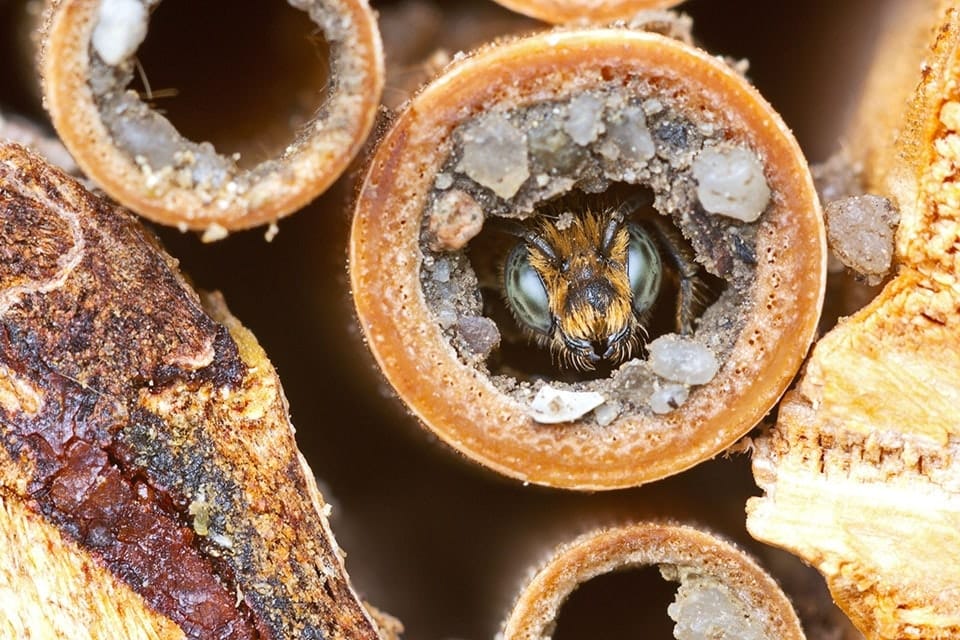
Many native bees such as carpenter bees rely upon hollow stems for building their nests
Leaving dead plant stems in place, particularly during the winter and early spring, offers several significant benefits, especially for wildlife and the overall garden ecosystem.
Here’s why you should consider leaving dead stems standing over the winter:
Insect Habitat: Dead stems, especially hollow or pithy ones, serve as crucial overwintering sites for many beneficial insects, including solitary bees, ladybugs, and beetles. These insects take shelter inside the stems to escape the cold and safely hibernate until warmer weather arrives.
Support for Native Bees: Many native bee species, including leafcutter bees and small carpenter bees, utilize plant stems for nesting. By leaving stems standing, you provide essential nesting opportunities for these important pollinators.
Food Source for Wildlife: The seed heads of many plants persist through the winter and provide a valuable food source for birds, squirrels, and small mammals when other food sources are scarce.
Protection for Plants: Leaving dead stems can help protect the plant’s roots from harsh winter conditions. They can also provide a natural mulch layer, helping to insulate the soil and suppress weeds.
Natural Decomposition: As the stems decompose, they contribute to the soil’s organic matter, improving its health and fertility. This natural process reduces the need for external fertilizers.
Structural Support: Some dried stems, when left standing, can provide a bit of support for next year’s growth, helping plants that tend to flop stay more upright.
Native plants with hollow or pithy stems
Herbaceous Plants
Yarrow (Achillea millefolium)
Cow Parsnip (Heracleum maximum)
Lupine (Lupinus rivularis and Lupinus polyphyllus)
Goldenrod (Solidago canadensis and others)
Fireweed (Chamerion angustifolium)
Biscuitroot (Lomatium dissectum)
Milkweed(Asclepias speciosa and Asclepias fascicularis)