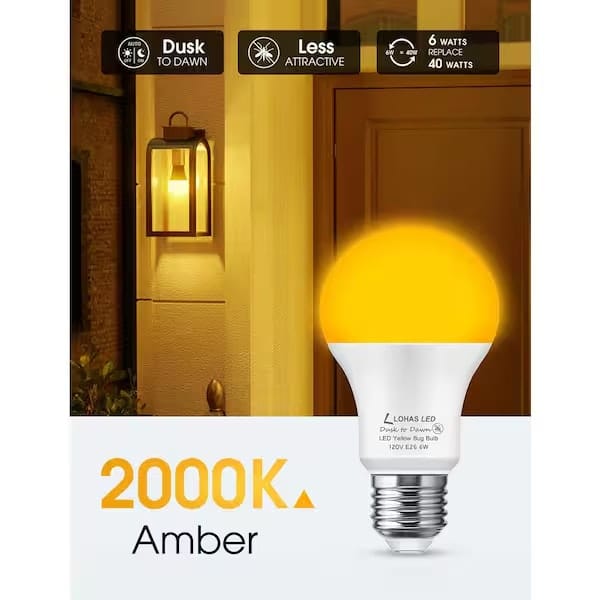
Replacing outdoor lights with amber bulbs protects nocturnal wildlife by reducing blue light emissions, which are highly disruptive to animal navigation, foraging, and mating behaviors. Unlike harsh white tones, amber lights produce longer wavelengths, which are less attractive to insects and are less likely to disorient bats ormigrating birds.
Look for bulbs with a kelvin number (K) of less than 3000K. This relates to the color of the lighting, and a lower number means the bulb will be more yellow, amber or orange. You can look for softer lights with lower lumens, too.
As an added bonus, lower-wattage bulbs also last longer and consume less energy!
For maximum wildlife benefits, combine amber bulbs with shielded fixtures that direct light downward instead of outward.