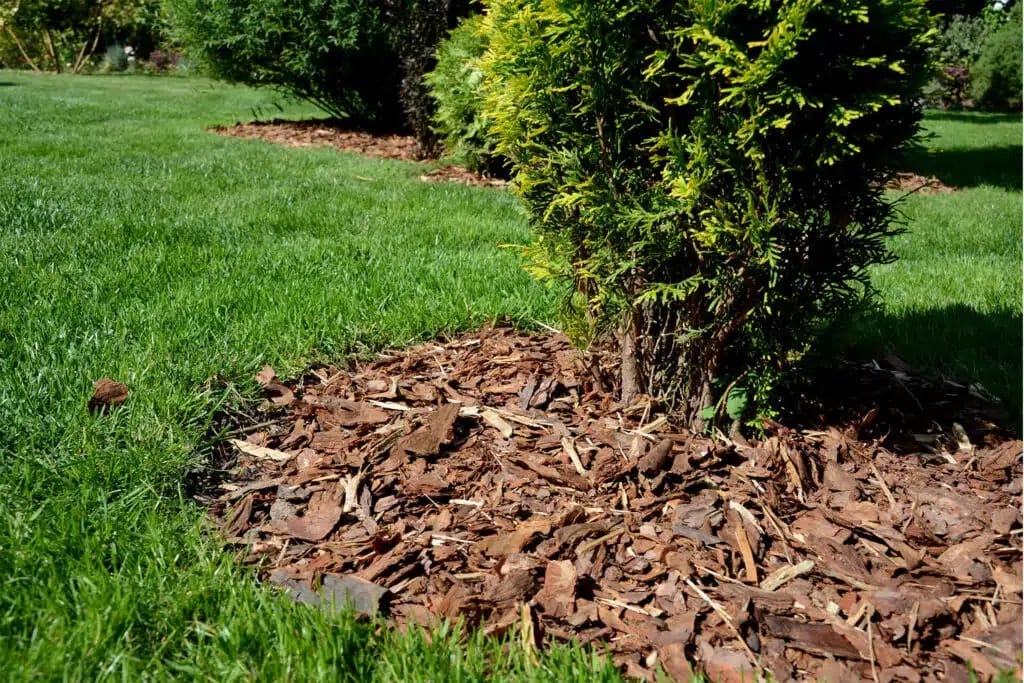
Mulch is a great way to add interest and suppress weeds in any garden! Here are just a few reasons to mulch:
- Moisture Conservation: Mulch reduces evaporation from soil, keeping roots hydrated longer and reducing the need for frequent watering.
- Weed Suppression: A thick layer blocks sunlight from reaching weed seeds, preventing or reducing weed growth.
- Soil Temperature Regulation: Mulch keeps soil cooler in summer and warmer in winter, protecting plant roots from extreme temperatures.
- Soil Health Improvement: As wood chips decompose, they add organic matter to the soil, improving texture, structure, and nutrient availability.
- Erosion Control: Mulch prevents soil from washing or blowing away during heavy rains or wind.
- Aesthetic Appeal: Creates a tidy, uniform look that enhances the visual appeal of garden beds.
- Supports Beneficial Organisms: Mulch provides habitat for earthworms, fungi, and beneficial insects that improve soil fertility and plant health.
There are lots of types of mulch beyond wood chips. These can include compost, tree bark, straw, leaves, or other plant matter.
Methods for applying wood chips or mulch:
Choose the Right Material:
- Use aged or composted wood chips if possible; fresh chips can temporarily tie up nitrogen in the soil.
- Avoid chips from allelopathic trees like black walnut or eucalyptus.
Prepare the Soil:
- Remove weeds before applying mulch.
- Water plants and soil thoroughly to ensure moisture beneath the mulch.
Apply the Mulch:
- Spread a 2 to 4-inch layer of wood chips or mulch around plants, keeping mulch a few inches away from plant stems and trunks to prevent rot and pest issues.
- Extend mulch out to cover the root zone or drip line when possible.
Maintain the Mulch Layer:
- Replenish mulch annually or as it decomposes to maintain effective depth.
- Lightly fluff or turn mulch if it becomes compacted.
Use Mulch as Pathways or Groundcover:
- Spread wood chips on garden paths or between planting rows to reduce weeds and mud.