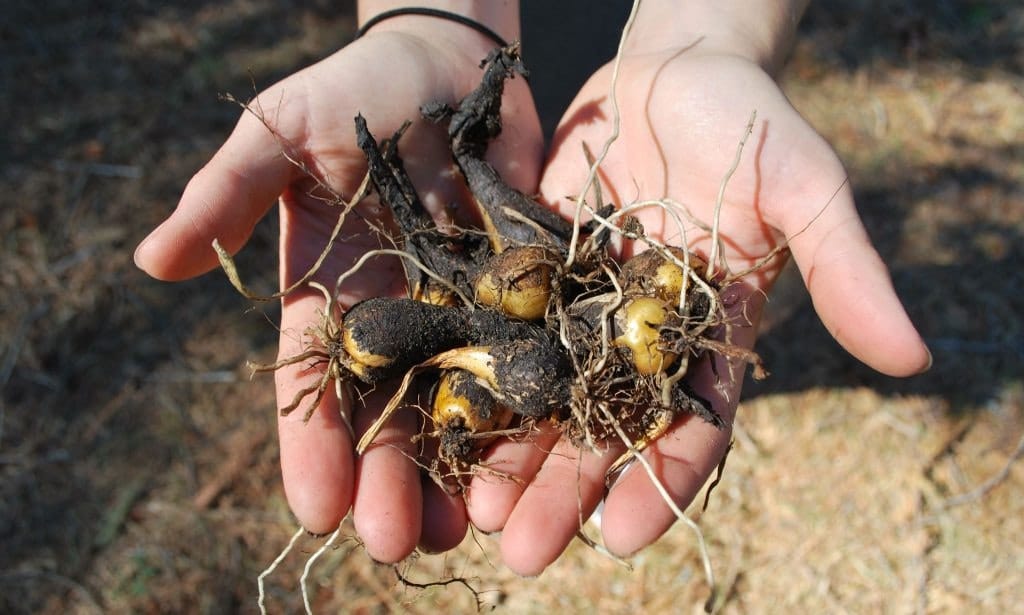
Both of these plant types are important parts of any native habitat.
bulbs
Many native bulbs bloom very early or in distinct seasonal windows, offering nectar and pollen when few other plants are flowering. Some native bulbs have co-evolved with specific insects. Bulbs provide important food sources for browsing animals like deer, voles, and bears. Many bulbs have relationships with mycorrhizal fungi, which improve soil structure, water retention, and nutrient cycling. Their underground parts help stabilize soil, especially in meadows and seasonal wet areas.
- Common Camas (Camassia quamash) – Blue star-shaped flowers; important food source for people and wildlife
- Great Camas (Camassia leichtlinii) – Larger flowers; moist to seasonally wet meadows
- Checker Lily / Chocolate Lily (Fritillaria affinis) – Nodding, mottled brown flowers; blooms in moist meadows and woodlands
- Triplet Lily (Triteleia hyacinthina) – Delicate white to pale lilac flowers in spring and early summer
- Forktooth Ookow (Dichelostemma congestum) – Purple-blue clusters of tubular flowers; sunny open sites
- Oregon Fawn Lily (Erythronium oregonum) – Elegant white flowers with mottled leaves; early spring bloomer
- Western Trillium (Trillium ovatum) – Iconic three-petal flower; thrives in shady woodland understories
- Harvest Brodiaea (Brodiaea coronaria) – Violet flowers; prefers dry, open habitats
- Elegant Brodiaea (Brodiaea elegans) – Showy purple flowers with narrow petals; late spring bloomer
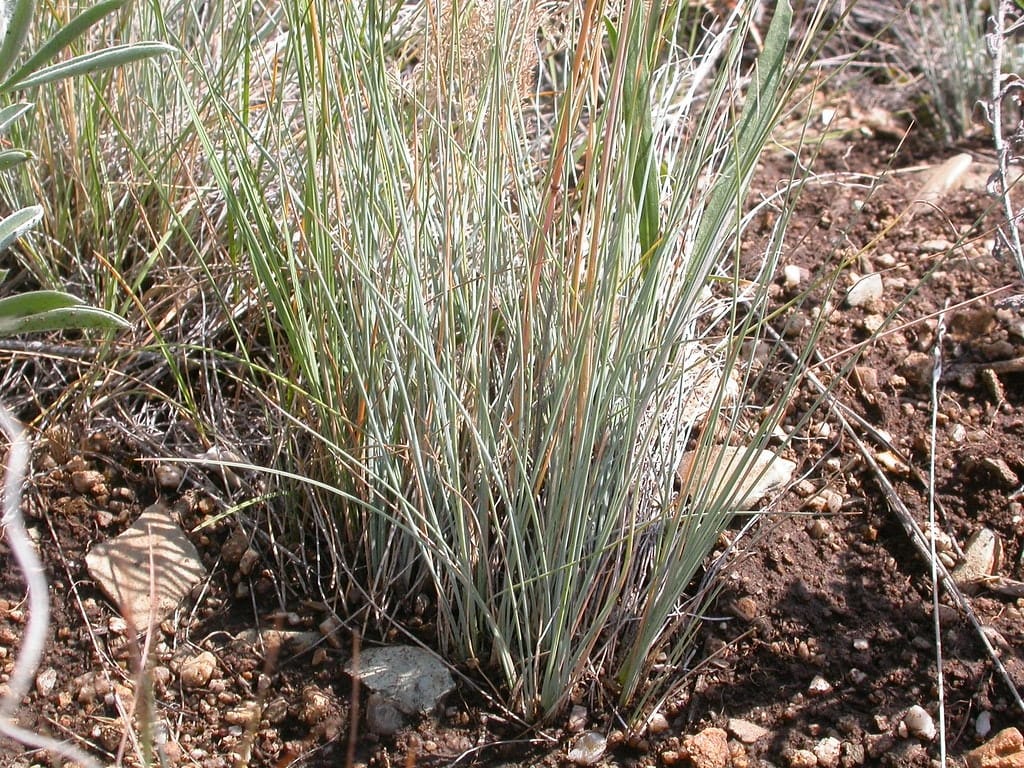
grasses
While slogans such as “kill your lawn” promoting less turf grass have gained popularity, native grasses are vital for wildlife. Native grasses have deep, fibrous root systems that hold soil in place, reducing erosion on slopes, streambanks, and open fields. These roots build organic matter and improve soil structure, increasing water retention and resilience to drought. Their long-lived root systems store carbon deep in the soil, helping to mitigate climate change by pulling CO₂ from the atmosphere. They provide nesting material and cover for birds, host larval insects, and shade out invasive weeds.
- Roemer’s Fescue (Festuca roemeri) – drought-tolerant bunchgrass, good for prairies and restoration
- California Oatgrass (Danthonia californica) – adaptable to a wide range of sites
- Blue Wildrye (Elymus glaucus) – tall and fast-growing; great for erosion control
- Slender Hairgrass (Deschampsia elongata) – delicate texture, moist woodland edges
- Tufted Hairgrass (Deschampsia cespitosa) – common in wetlands and meadows
- Idaho Fescue (Festuca idahoensis) – great for sunny, dry meadows
- Meadow Barley (Hordeum brachyantherum) – thrives in seasonal wet areas