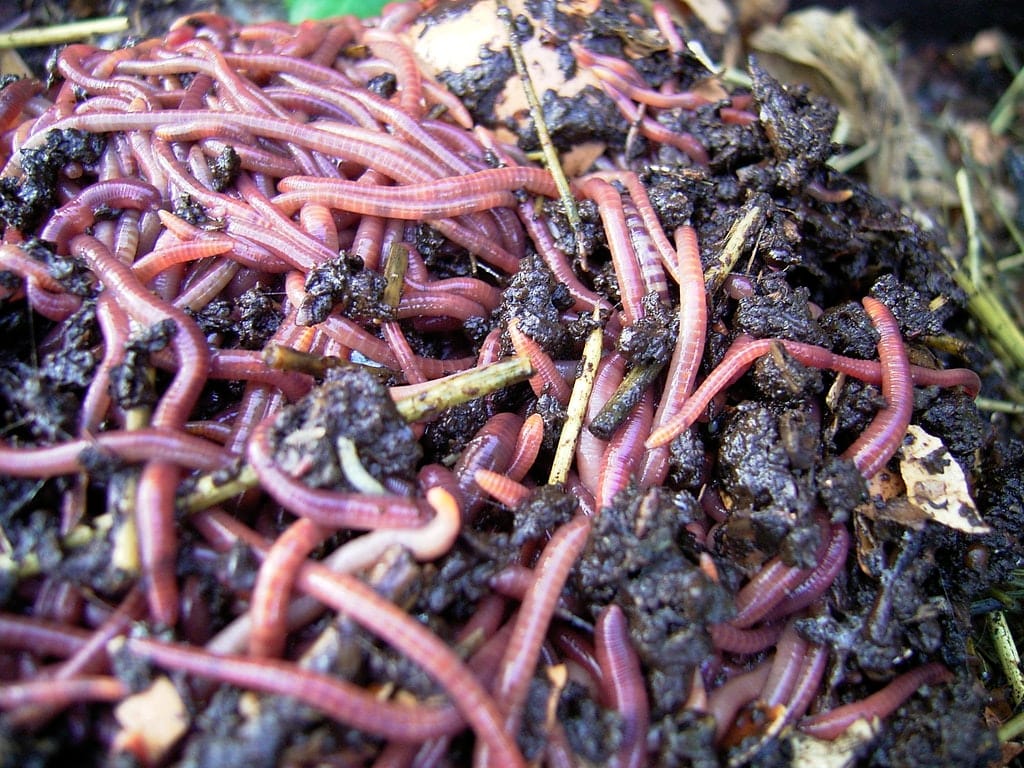
Vermiculture is the process of raising earthworms, primarily for use in vermicomposting, a method of composting organic waste using worms. It can also refer to the broader practice of worm farming for various purposes like bait or research.
There are tons of great reasons to raise worms at home:
- Produce nutrient-rich worm castings that greatly improve soil fertility and plant growth.
- Recycle kitchen scraps and organic waste efficiently, reducing landfill contributions.
- Speed up decomposition compared to traditional composting in small spaces.
- Suitable for indoor or small-space gardening, including apartments or urban settings.
- Minimal odor and pests when properly maintained.
- Encourages sustainable living and waste reduction habits.
- Worm tea (liquid castings) can be harvested as a natural fertilizer spray.
how to create a vermiculture bin
1. Choose a Container:
- Use a plastic or wooden bin with a lid (size varies by waste amount, 8–20 gallons common).
- Drill small air holes on sides and lid for ventilation.
- Optional: Place the bin on legs or trays to collect worm tea runoff.
2. Prepare Bedding:
- Use moist shredded newspaper, cardboard, coconut coir, or aged compost.
- Bedding should be damp but not soaking wet, and fluffy for air circulation.
3. Add Worms:
- Use red wigglers (Eisenia fetida) — the best species for composting.
- Starter population depends on waste amount, roughly 1 pound of worms per square foot of bin area.
4. Add Food Waste:
- Feed worms kitchen scraps: fruit and vegetable peels, coffee grounds, crushed eggshells.
- Avoid meat, dairy, oily foods, and acidic foods (e.g., citrus) in large amounts.
- Add food in small amounts regularly, burying it in bedding to reduce odors.
5. Maintain the System:
- Keep the bin in a cool, shaded place (55–77°F ideal).
- Monitor moisture; add water if too dry or dry bedding if too wet.
- Turn bedding gently if it becomes compacted.
- Harvest worm castings every few months by moving worms aside or using a migration method.
6. Harvest and Use:
- Separate worms from finished compost.
- Use worm castings as soil amendment or potting mix ingredient.
- Dilute worm tea for foliar feeding or soil drench.