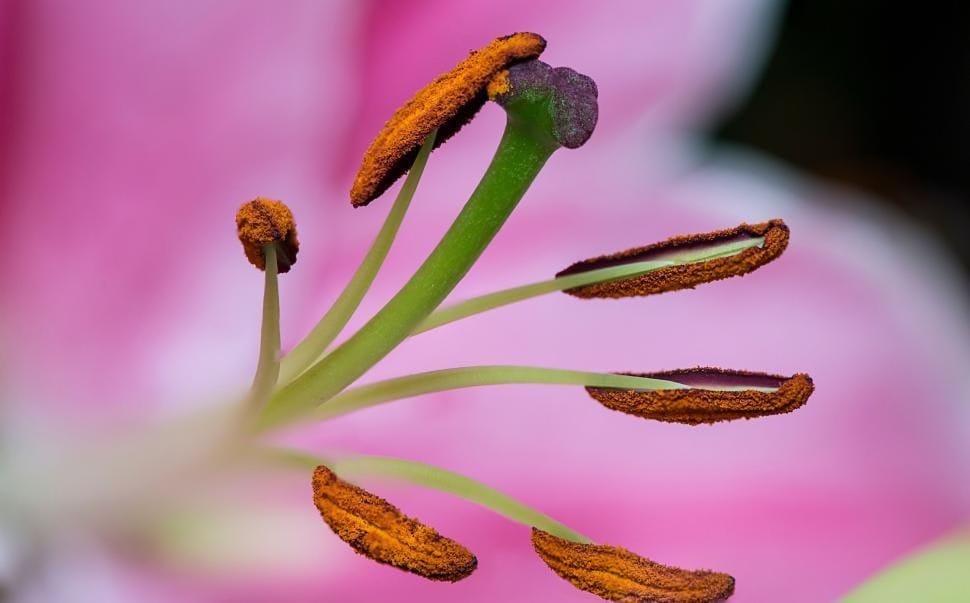
Native wildlife relies upon the food products of plants for survival. Fruits such as berries are great for larger animals like birds and squirrels, while nectar and pollen are both vital for pollinators during different life stages.
Nature Neighbors certification requires that you include species that can provide these foods. Find a list of native plants that provide each of these resources below.
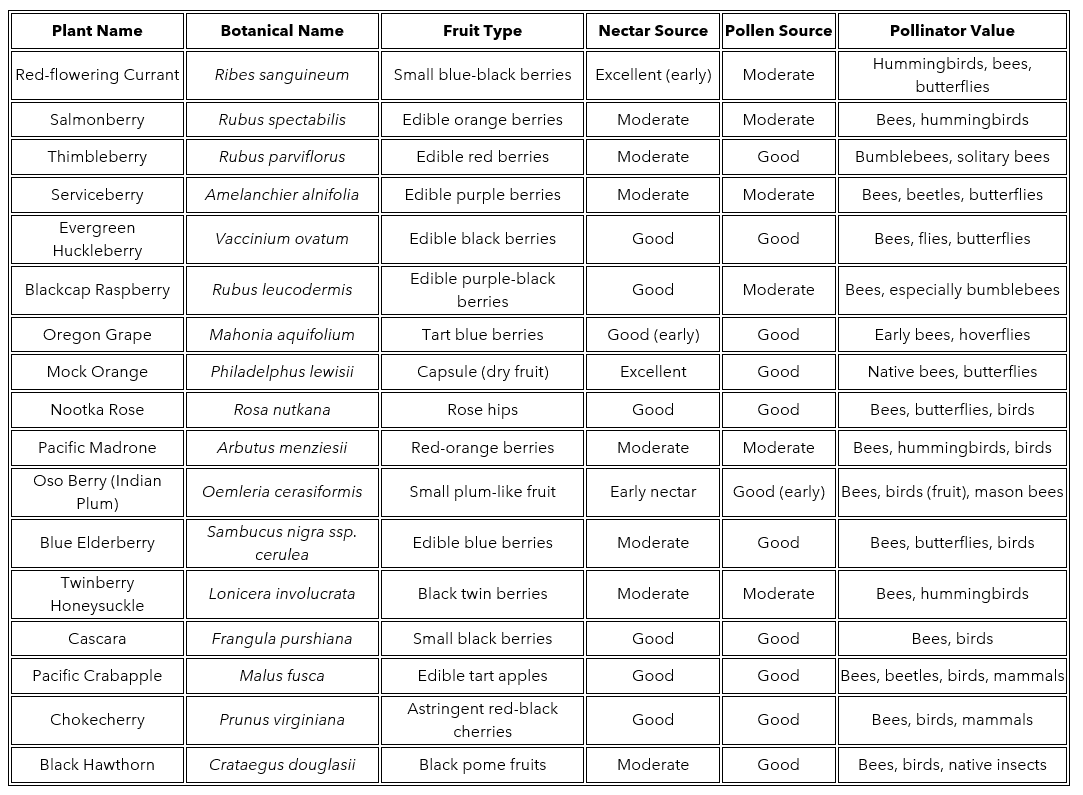
Fruit producers
- Salmonberry (Rubus spectabilis) – edible pink-orange berries
- Thimbleberry (Rubus parviflorus) – soft red berries
- Red Huckleberry (Vaccinium parvifolium) – tart red berries
- Evergreen Huckleberry (Vaccinium ovatum) – sweet black berries
- Blackcap Raspberry (Rubus leucodermis) – dark purple berries
- Trailing Blackberry (Rubus ursinus) – Oregon’s native blackberry
- Serviceberry / Saskatoon (Amelanchier alnifolia) – blueberry-like flavor
- Oregon Grape (Mahonia aquifolium) – tart blue berries (great in jam)
- Pacific Crabapple (Malus fusca) – tart fruit, often cooked
- Chokecherry (Prunus virginiana) – astringent but edible when cooked
- Western Strawberry (Fragaria vesca, Fragaria virginiana) – small wild strawberries
- Snowberry (Symphoricarpos albus) – white berries, toxic to humans
- Red-osier Dogwood (Cornus sericea) – white berries, wildlife food
- Elderberry (Blue) (Sambucus nigra ssp. cerulea) – edible cooked, toxic raw
- Twinberry Honeysuckle (Lonicera involucrata) – black berries, bitter
- Bitter Cherry (Prunus emarginata) – small bitter fruit for birds
- Ocean Spray (Holodiscus discolor) – not fruity, but seeds eaten by birds
- Pacific Madrone (Arbutus menziesii) – red-orange berries for birds
- Cascara (Frangula purshiana) – small black fruit, medicinal bark
- Oso Berry / Indian Plum (Oemleria cerasiformis) – early spring fruit, mild flavor
- Douglas Hawthorn (Crataegus douglasii) – small black fruits, edible but mealy
- Twining Honeysuckle (Lonicera hispidula) – red berries for birds
NECTAR PRODUCERS
- Douglas Aster (Symphyotrichum subspicatum) – late-season nectar for pollinators
- Yarrow (Achillea millefolium) – attracts many native bees
- Showy Milkweed (Asclepias speciosa) – essential for monarchs, rich in nectar
- Goldenrod (Solidago canadensis, Solidago lepida) – late-season magnet for bees
- Fireweed (Chamerion angustifolium) – popular with bees and hummingbirds
- Common Camas (Camassia quamash) – spring nectar source
- Large-flowered Phlox (Phlox maculata or P. amplifolia) – fragrant, good for butterflies
- Globe Gilia (Gilia capitata) – attracts native bees and butterflies
- Western Columbine (Aquilegia formosa) – hummingbird favorite
- Seablush (Plectritis congesta) – early bloomer for bumblebees
- Oregon Sunshine (Eriophyllum lanatum) – long-blooming bee favorite
- Red-flowering Currant (Ribes sanguineum) – very early nectar for hummingbirds
- Oceanspray (Holodiscus discolor) – fluffy, nectar-rich clusters
- Mock Orange (Philadelphus lewisii) – fragrant and heavily visited
- Blue Elderberry (Sambucus nigra ssp. cerulea) – masses of white flowers
- Nootka Rose (Rosa nutkana) – supports both nectar and pollen seekers
- Serviceberry (Amelanchier alnifolia) – blooms early for spring pollinators
- Snowberry (Symphoricarpos albus) – small but useful nectar flowers
- Western Trumpet Honeysuckle (Lonicera ciliosa) – hummingbird favorite
- Twinberry (Lonicera involucrata) – valuable for early nectar
- Coastal Strawberry (Fragaria chiloensis) – nectar and pollen for early bees
- Bigleaf Maple (Acer macrophyllum) – prolific early nectar and pollen
- Pacific Madrone (Arbutus menziesii) – flowers feed bees and hummingbirds
- Oso Berry (Indian Plum) (Oemleria cerasiformis) – first to bloom in late winter
- Chokecherry (Prunus virginiana) – fragrant spring nectar source
- Black Hawthorn (Crataegus douglasii) – many pollinator visitors
pollen producers
- Bigleaf Maple (Acer macrophyllum) – very rich in pollen, early spring bloomer
- Red Alder (Alnus rubra) – pollen-heavy catkins (wind-pollinated but bees use it)
- Oso Berry / Indian Plum (Oemleria cerasiformis) – one of the earliest blooms
- Pacific Willow (Salix lucida, S. scouleriana) – excellent early pollen and nectar
- Cascara (Frangula purshiana) – small flowers, good resource for bees
- Chokecherry (Prunus virginiana) – fragrant spring flowers rich in pollen
- Douglas Hawthorn (Crataegus douglasii) – attracts native bees and beetles
- Yarrow (Achillea millefolium) – flat flower heads are great for pollen access
- Goldenrod (Solidago canadensis, S. lepida) – late pollen source
- Common Camas (Camassia quamash) – abundant pollen in spring
- Douglas Aster (Symphyotrichum subspicatum) – long bloom period with pollen
- Oregon Sunshine (Eriophyllum lanatum) – a bee magnet
- Globe Gilia (Gilia capitata) – good pollen and nectar mix
- Lupine (Lupinus spp.) – bumblebees “buzz pollinate” to release pollen
- Clarkia (Clarkia amoena, C. purpurea) – rich in pollen, supports native solitary bees
- Phacelia (Phacelia hastata, P. linearis) – outstanding pollen and nectar plant
- Red-flowering Currant (Ribes sanguineum) – abundant pollen and nectar
- Mock Orange (Philadelphus lewisii) – highly attractive to native bees
- Nootka Rose (Rosa nutkana) – open flowers offer easy pollen access
- Oceanspray (Holodiscus discolor) – supports diverse bee species
- Blue Elderberry (Sambucus nigra ssp. cerulea) – compound blooms with lots of pollen
- Snowberry (Symphoricarpos albus) – underrated pollinator shrub
- Coastal Strawberry (Fragaria chiloensis) – early spring pollen
- Western Honeysuckle (Lonicera ciliosa) – supports long-tongued bees and hummingbirds
plant powerhouses: species that provide excellent sources of fruit, pollen, and nectar