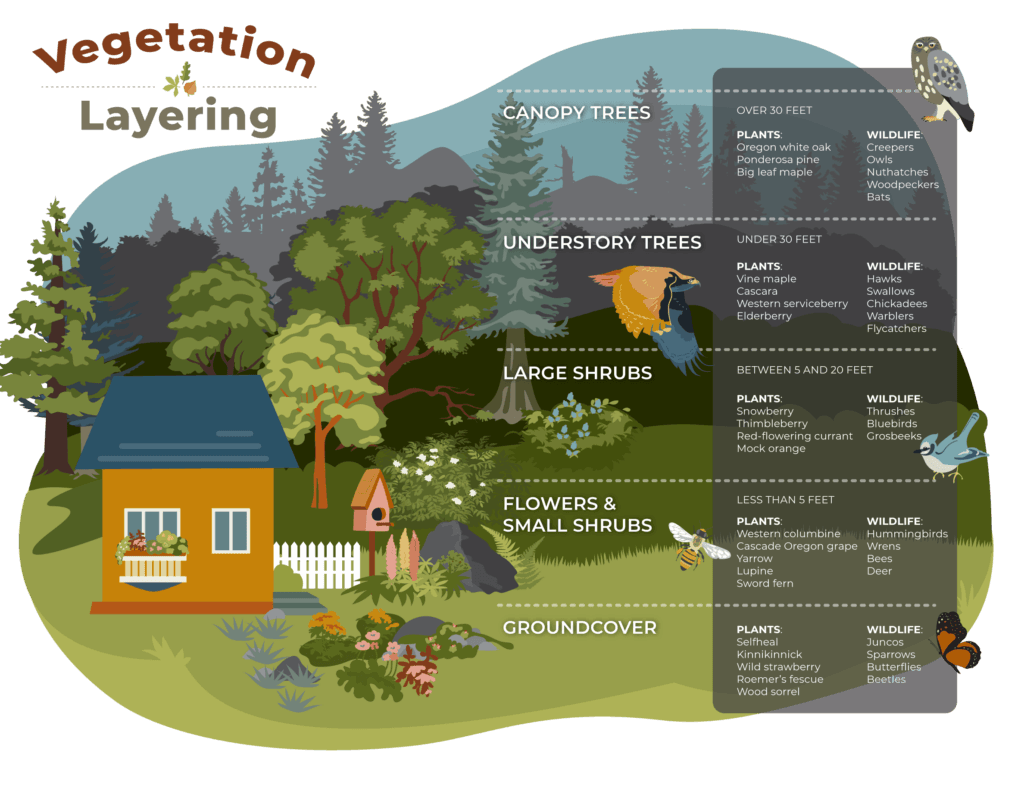
Vegetation layers refer to the heights of different types of plants in your habitat.
These are important because different types of wildlife find food and shelter in different heights. Some species can only exist in one specific layer. Others travel between many layers throughout the season or their lifetimes.
To be certified as a Nature Neighbor, your habitat should include at least 3 of the following types of vegetation:
Canopy Trees (Over 30 Feet) such as:
- Oregon white oak
- Ponderosa pine
- Big leaf maple
Understory Trees (Under 30 Feet) such as:
- Vine maple
- Cascara
- Western serviceberry
- Elderberry
Large Shrubs (Between 5 and 20 Feet) such as:
- Snowberry
- Thimbleberry
- Red-flowering currant
- Mock orange
Flowering & Small Shrubs (Less Than 5 Feet) such as:
- Western columbine
- Cascade Oregon grape
- Yarrow
- Lupine
- Sword fern
Groundcover (less than 12 inches) such as:
- Selfheal
- Kinnikinnick
- Wild strawberry
- Roemer’s fescue
- Wood sorrel