NEED TO KNOW: Under Oregon Law, all water belongs to the public. With few exceptions, anyone wishing to take and use surface water or groundwater must first obtain a permit from the Oregon Water Resources Department. Call 503-508-2394 or email our local Watermaster at joel.m.plahn@water.oregon.gov for permit help.
A rain garden is a shallow, landscaped depression designed to collect and absorb rainwater runoff. Essentially, it’s a garden that temporarily holds rainwater, allowing it to soak into the ground instead of flooding or flowing into storm drains.
Installing a rain garden or pond offers a wide range of environmental, practical, and aesthetic benefits — especially in regions like Oregon, where managing seasonal rain is important for both flood prevention and water quality protection. Here are just some of the benefits of rain gardens, ponds, and bioswales:
Manages Stormwater Naturally
- Captures and absorbs runoff from roofs, driveways, and patios before it enters storm drains.
- Helps slow down, spread out, and soak in water during heavy rains, reducing local flooding and erosion.
Improves Water Quality
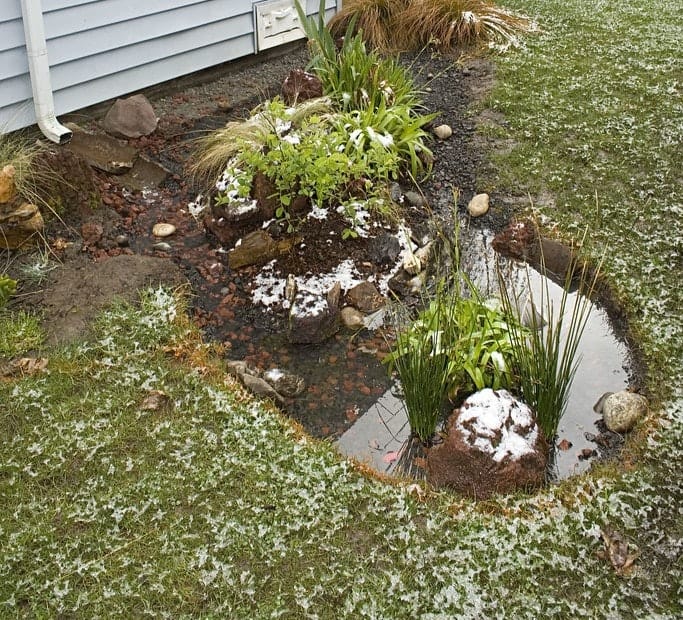
- Filters out pollutants like oil, heavy metals, fertilizers, and pet waste before they reach creeks, rivers, and groundwater.
- Acts as a natural biofilter, using soil, plants, and microbes to clean runoff.
Recharges Groundwater
- Promotes infiltration of rainwater into the soil, helping replenish underground aquifers and stabilize stream flows.
Provides Wildlife Habitat
- Supports native bees, butterflies, birds, and amphibians with diverse plantings and seasonal water.
- Adds habitat in developed areas where wildlife needs safe foraging and nesting space.
fosters Climate Resilience
- Helps buffer against droughts and extreme storms by holding water in the landscape.
- Creates cooler microclimates with vegetation that reflects and retains less heat than pavement or turf.
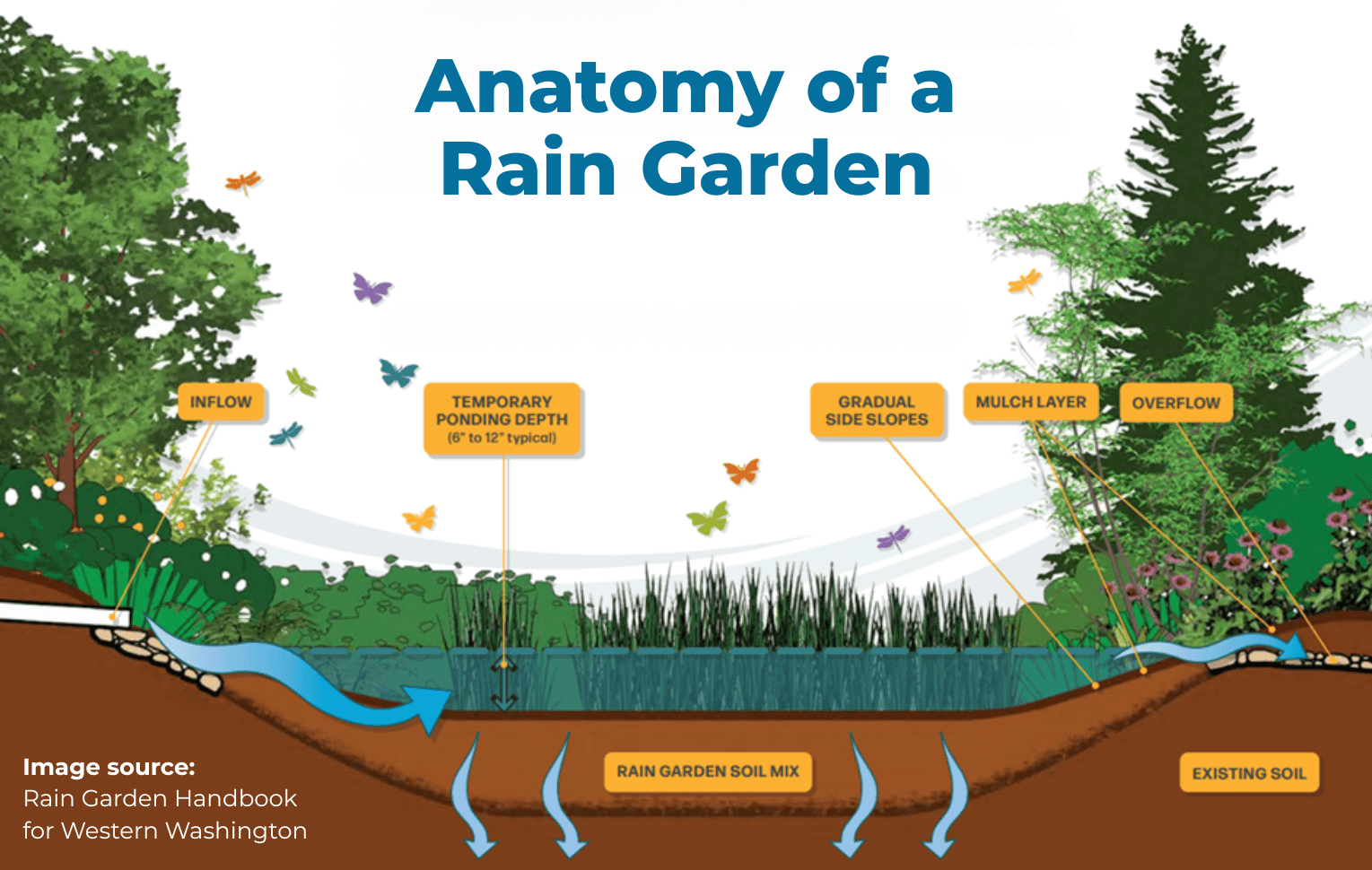
What about bioswales?
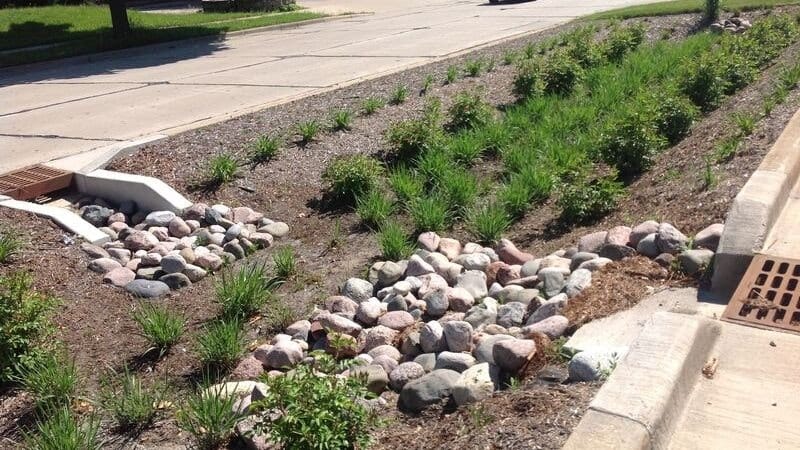
Bioswales are landscape features designed to manage stormwater naturally by capturing, filtering, and slowly infiltrating runoff into the soil. It’s usually a shallow, vegetated channel—like a gently sloped ditch—containing native grasses, sedges, shrubs, and flowers that tolerate both wet and dry conditions.
Bioswales are useful in larger areas that are especially prone to flooding. Bioswales are engineered to handle stormwater runoff, especially from paved surfaces. They’re often found along roads or sidewalks. Rather than a round, pond-like rain garden, bioswales tend to be linear.