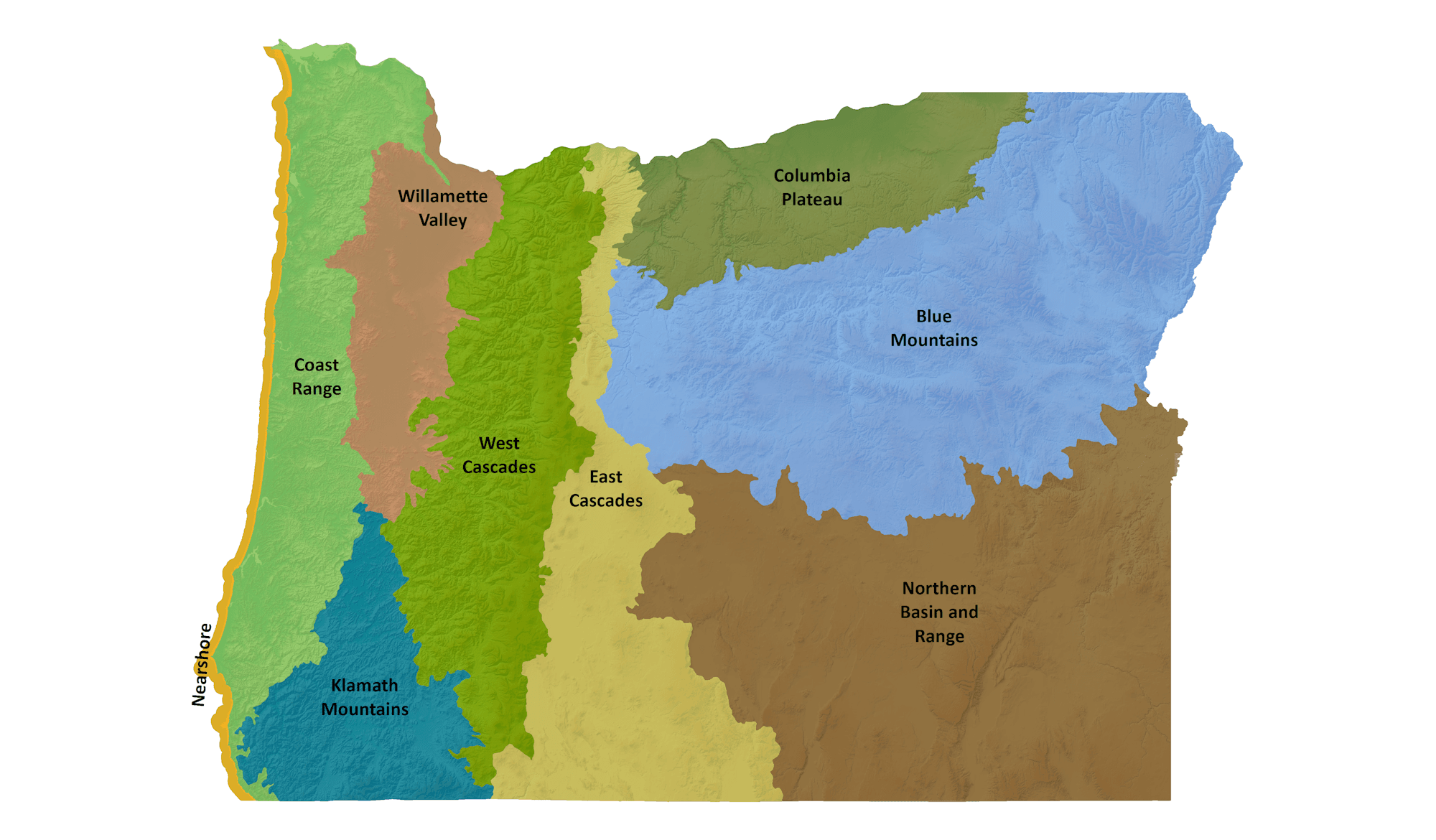
A native species is one that is known to have been present before Europeans colonized the area – for the Willamette Valley, this was in the early 1800’s. Scientists determine whether a species is native to an area by using fossil records, historical documents, and both modern and historical maps.
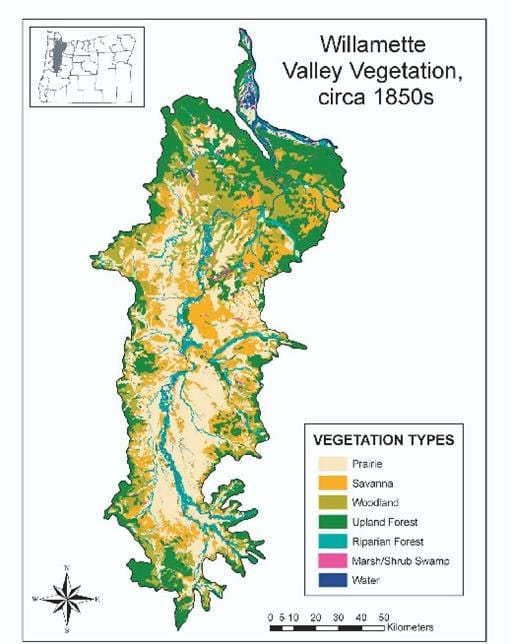
For Nature Neighbors, we consider any species that is native to the state of Oregon a qualifying native species; however, we strongly encourage you to choose species that are native specifically to the Willamette Valley for the greatest wildlife and ecosystem benefits.
But how do you know if a plant is native to these regions? A quick internet search with the plant’s name (be sure to include the Latin name) and “native range” will usually bring up the species’ known range map. You can also use the Oregon Flora search tool to find range maps (plus habitat requirements and care information) for most plants.
All of the species suggested in this guide, as well as found in our Native Plant Database, are native to the Willamette Valley.
Planning for the Future
As the climate shifts, plant (and animal) ranges shift. For us, this means that species are slowly moving northward as the climate warms. In other words, species that are common in Southern Oregon but rare here will become more and more common. The impacts of these newly-common species are difficult to forecast. Currently, some scientists are recommending that home gardeners participate in “assisted migration” – planting species from further South that are likely to become more common here. You should use your best judgment when selecting plants from either the Willamette Valley, Klamath eco-region, or elsewhere, based on your own goals and site conditions.